Friday, 4 June 2021

Kingdom Monera - Structure, Habitat, Characteristics, Classifications, Types of Bacteria, Economic importance

                         Kingdom Monera


Kingdom Monera

Basic information:

Kingdom Monera includes all prokaryotic organisms with noncellulosic (Polysaccharide and amino acid) cell wall. Bacteria are the sole members of the Kingdom Monera.

Habitat: They are found everywhere i.e., in very hot or cold region or inside human body.

Characters:

The main characters of kingdom Monera are:

·        The members of kingdom monera are prokaryotic.

·        Cell Wall is Noncellulosic (Polysaccharide and amino acids)

·        Nuclear membrane is absent.

·        Body organisation is Cellular.

·        Mode of nutrition is Autotrophic (Chemosynthetic and photosynthetic) and Heterotrophic (Saprophytic and Parasitic)


Bacteria are grouped under four categories Based on their shapes:

1.   cocci: Coccus (pl.: cocci) are spherical, ovoid or generally round shaped bacteria. If two coccus were attached together they were called diplococci; rows of such bacteria are called Streptococci and if bacteria are attached in groups or clusters they are called Staphylococci. Sarcina is the condition when cocci are arranged in cubes of eight.


Cocci based on their arrangement


2.   Bacilli: Bacillus (pl.: bacilli) are cyllindrical or rod-shaped bacteria. These bacteria were widely found in soil and water. These bacteria were also found in the gastrointestinal tract of ruminants and humans.


 3.   Vibrio: Vibrium (pl.: Vibrio) are comma shaped bacteria. They are commonly  found in aquatic and marine environment.


Vibrio

 4.   Spirillum: Spirillum (pl.: spirilla) are the spiral,large, elongate and rigid bacteria. They are usually found in stagnant freshwater rich in organic matte

Spirillum


Kingdom Monera is divided into two groups

1.   Archeabacteria

2.   Eubacteria


1.   Archeabacteria: These are the ancient and special bacteria since they live in some of the most harsh habitats suh as extreme salty areas (halophiles), hot springs (thermoacidophiles) and marshy areas (methanogens). These are called ancient bacteria because these are one of the oldest living organisms known on Earth.


Archeabacteria

 Characteristics of Archeabacteria:

Here are listed some important characteristics of Archeabacteria:

·        Most primitive prokaryotes.

·        Can live under extreme harsh conditions.

·        Known as living fossils.

·        They can be obligate anaerobes or facultative anaerobes.

·        used in the production of gobar gas and cellulose fermentation.

·        Absence of peptidoglycan in cell wall.\


2.   Eubacteria: These are prokaryotic microorganisms consisting of a single cell lacking a nucleus and containing DNA is a single circular chromosome. Eubacteria is also known as true bacteria. They are characterised by the presence of a rigid cell wall, and if motile, a flagellum. The cyanobacteria (also referred to as blue-green algae) have chlorophyll a similar to green plants and are photosynthetic autotrophs. Eubacteria can be either gram-negative or gram-positive.


Eubacteria

 Characteristics of Eubacteria:

·        Microscopic in nature.

·        Cell wall is made up of peptidoglycan.

·        They are unicellular.

·        Sexual reproduction is absent.

·        Motile bacteria possess flagella.

·        Some of these organisms can fix atmospheric nitrogen in specialised cells called heterocysts, e.g., Nostoc and Anabaena.

·        They play a great role in recycling nutrients like nitrogen, phosphorous, iron and sulphur.


Economic importance:

Ecologically, monerans are major decomposers in the world’s ecosystems. Many have symbiotic relationships, some have mutualistic, and some have parasitic. They can be used in food production, in the manufacture of artificial snow, in mining, and in biotechnology in the manufacture of pharmaceuticals.


Wednesday, 2 June 2021

Taxonomical Aids - Definition, Examples, Types (Botanical Garden, Zoological Parks, Herbarium, Museum and Key)


                        Taxonomic Aids

Taxonomic aid – An overview:

Taxonomic studies of various species of plants, animals and other organisms are useful in agriculture, forestry, industry and in general in knowing our bio-resources and their diversity. These studies would require correct classification and identification of organisms. Identification of organisms requires intensive laboratory and field studies. The collection of actual specimens of plant and animal species is essential and is the prime source of taxonomic studies. In this article, we will discuss about the definition, types, example, and an overview about the taxonomic aids.

Definition:

Biologist has established certain procedures and techniques to store and preserve the information as well as the specimens. Any technique and procedure which help in studying various species are called Taxonomic aids.

Examples of taxonomic aids:

Some examples of taxonomic aids are:

Botanical gardens, Zoological parks, Museum, Herbarium, Monograph, fore etc...,

Types of Taxonomical Aids:

1.    Botanical Gardens: Botanical gardens are places where we grow various varieties of plants for scientific study. These botanical gardens help to educate people. Some important botanical gardens are:

·         Acharya Jadish Chandra Bose Botanical garden (old name – Indian Botanical Garden). It is situated in Kolkata (Howrah). This garden is famous for The Great Banyan (Ficus Benghalensis) tree. It is 250 years old tree and has 2800 prop roots. It is also famous for Victoria amozonica (water lilly plant). The diameter of single leaf of this plant is 2.3 mtr.

·         National Botanical garden – Lucknow

·         Royal Botanical Garden – Kew (England)


                               Botanical Garden


  Zoological Parks: These are enclosed places where wild animals were kept for scientific study or these are the places where wild animals are kept in protected environments under human care and which enable us to learn about their food habits and behaviour. These are mainly used for protection of endangered animal. These are also very helpful to educate people.


Zoological Parks


  Museum: Museum is places where preserved organisms are placed.

Museum has collections of preserved plant and animal specimens for study and reference. Plants and animals specimens may also be preserved as dry specimens. Insects are preserved in insect’s boxes after collecting, killing and pinning. Larger animals like birds and mammals are usually stuffed and preserved. Museums often have collections of skeletons of animals too.


Museum


 Herbarium: Herbarium is collections of dried, pressed, mounted plants. It is a store house of collected plant specimens that are dried, pressed and preserved on sheets.


Herbarium Sheet


 Key: A set of alternate statement i.e., 2 statements. These 2 statements are known as couplet. One statement is known as lead.


Key


 Some important terms:

Monograph: Systematic study of one taxon or category.

Manual: Manual includes Information about one species.

Flora: Plants found in particular area.


Tuesday, 1 June 2021

Chemistry Basic

 Chemistry

Introduction:

Chemistry: It is the branch of science which deals with the study of chemicals, substance or matter.

Father: Antoine Lavoisier

Substance or Matter: Anything in this universe which have some weight (mass) and which can occupy some space is called Substance or Matter.

Stages of Matter:

There are four stages of Matter:-

1.      Solid

2.      Liquid

3.      Gas

4.      Plasma

We will discuss these stages in detail:

1.      Solid:

·         Molecules remain closure to each other.

·         Strong inter-molecular forces between the molecules.

·         High density.

·         Definite size and volume.

2.      Liquid:

·         Indefinite size.

·         Definite volume.

3.      Gas:

·         Indefinite volume and size.

Weak inter-molecular forces.

·         Distance between molecules are more.

4.      Plasma:

·         Discovered by William Crookes in 1879.

·        
Gas  ionised (High temp)     Plasma.

Conversion of Stages of Matter:

·        
Solid    Melting         Liquid

·        
Liquid   Freezing        Solid

·        
Liquid   Evaporation    Gas

·        
Gas      Condensation    Liquid

·        
Gas    Deposition      Solid

·        
Solid  Sublimation      Gas


 https://youtu.be/bka20Q9TN6M


Friday, 28 May 2021

How Black Hole affect our earth?


         Can Earth be affected by a black hole in the future?

To know the answer of this question, firstly we have to know about the concept of black hole and how does it works.

So now we start with the introduction of Black hole;

You know that our universe is made up of stars, asteroids, galaxies, Planets, satellites, meteorites etc. But beside all these there are thousands of things that were present in our universe and most of them are still to be discovered. Black hole is a region present in our universe where gravity is so strong that no particles can escape from it. For example, if our earth is swallowed by the Black hole than there is no chance for earth escape from it.


                                                                                       Black Hole

History of Black Hole:

Einstein was the first person who predicted the existence of black hole. He published his theory of general relativity in 1916. This theory describes how gravity shapes the fabric of space-time. This theory gave him the idea of black hole.

Formation of Black Hole:

When a star dies, it collapses inward rapidly. As it collapses, the star explodes into a supernova. The stars with more than 20 magnitudes are called supernova. The dying star continues to collapse until it becomes a singularity (something consisting of zero volume and infinite density). The extreme density of the new singularity pulls everything towards it, including space-time (It is the union of space and time as one four-dimensional continuum. This would finally result in the formation of Black Hole.

We may never be able to prove exactly what happens inside black holes, although many scientists are making the connection between singularities and the big bang theory, which proposes that our universe exploded into existence from what, could have been a singularity.

What happen if Black whole enter our solar system:

Anything that comes close to black hole gets doomed. Stars, planet, and even solar system. If a black hole found any way to enter our solar system it will totally disrupt the gravitational forces of our solar system. The black will literally tear planets from their orbits and smashed them into each other. For example, if it comes close to planet Jupiter it could actually pull the moon of Jupiter away from the planet itself. It results in the unbalancing of the rotation of moons of Jupiter.

How does Black hole affect our earth?

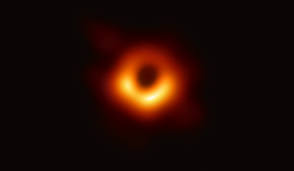
According to Astronomer’s, the closest Black hole to the earth is 1,000 light-years away. NASA captures the image of black hole by creating a network of telescopes known as Event Horizon Telescope, or the EHT. They set out to capture an image of a black hole by improving upon a technique that allows for the imaging of far-away objects, known as Very long Baseline interferometer, or VLBI. According to them, this black hole still has no impact on our earth. But as the distance reduced between earth and the black hole it may affect the gravitation forces of our solar system which results in misbalance of our solar system.


image of black hole captured by Event Horizon Telescope


Conclusion:

 From the above discussion we conclude that the black hole can totally disrupt the gravitational forces of our solar system. It results in the unbalance of our earth rotation and earth orbit movement. And also results in the collision of stars, planets and moons.


Wednesday, 26 May 2021

Bionomial Nomenclature

Nomenclature

Nomenclature: Nomenclature simply “To give naming”. The council which provide naming to the plant species is ICBN (International Council of Botanical Nomenclature) while the council which give naming to the animals is ICZN (International Council of Zoological Nomenclature).

Today I will tell you about the rules for writing the nomenclature. There are 7 simple rules after knowing them you can easily give name to both plant and animal species.

Rules for writing Nomenclature:

1.    Every species would be given two word names which is the Binomial system of Nomenclature. The Binomial system was given by Carouse Linnaeus.

2.    First word is the Generic Name and Second word is the species name.

3.    Latin Language is used to write the nomenclature.

4.    When the name is typed in a pc or laptop, it should be in Italics. While when the name is handwritten it should be underlined.

5.    Genus name start with capital and species name with Lower case.

6.    The name should have more than 3 letters and less than 20.

7.    We can also add the name of scientist who gave the name to the species e.g.: Homo Sapiens Linn.


Trinomial System:

In trinomial system we sub species after the species name. For e.g.; Homo sapiens sapiens.

Tautonyms:

When genus and species names are same then it is called as Tautonyms.  These are not accepted in plants.


BIOLOGY CHAPTER 1 - "LIVING WORLD"


What is living?                                                            

To understand the exact meaning of ‘living’ one should know about the following characters of living:

·         Growth

·         Reproduction

·         Respond to Stimuli

·         Metabolism


Now, we discuss these characters in details and try to understand that which one is defining property of living.

1.       Growth: Growth basically means Increase in size, mass, no. of cell. But Mountains also grow but from outside whereas living thing grow from inside. So, growth is not a defining property of living organisms.


2.       Respond to Stimuli or Consciousness: Respond to stimuli means awareness of surrounding on our environment. If a person is in comma does not respond to stimuli is consider living because he respond to chemicals, medicines and drugs that were given to him. So, this is the defining property of living.


3.       Reproduction: The living organisms reproduce.

Exceptions: Mule which is sterile is a hybrid of donkey and horse.

                     Infertile Humans.

So, we can say that reproduction is not a defining property of living organisms.


4.       Metabolism: Metabolism means all reactions occuring in a cell/organism.


Conclusion: From the above discussed points we can conclude that;

Respond to stimuli (Consiouness) and Metabolism is the defining property of Living while Growth and Reproduction is not the defining property of Living.


Kingdom Monera - Structure, Habitat, Characteristics, Classifications, Types of Bacteria, Economic importance

                          Kingdom Monera Kingdom Monera Basic information: Kingdom Monera includes all prokaryotic organisms with noncellulo...

Popular posts